
Newsletter Subscribe
Enter your email address below and subscribe to our newsletter
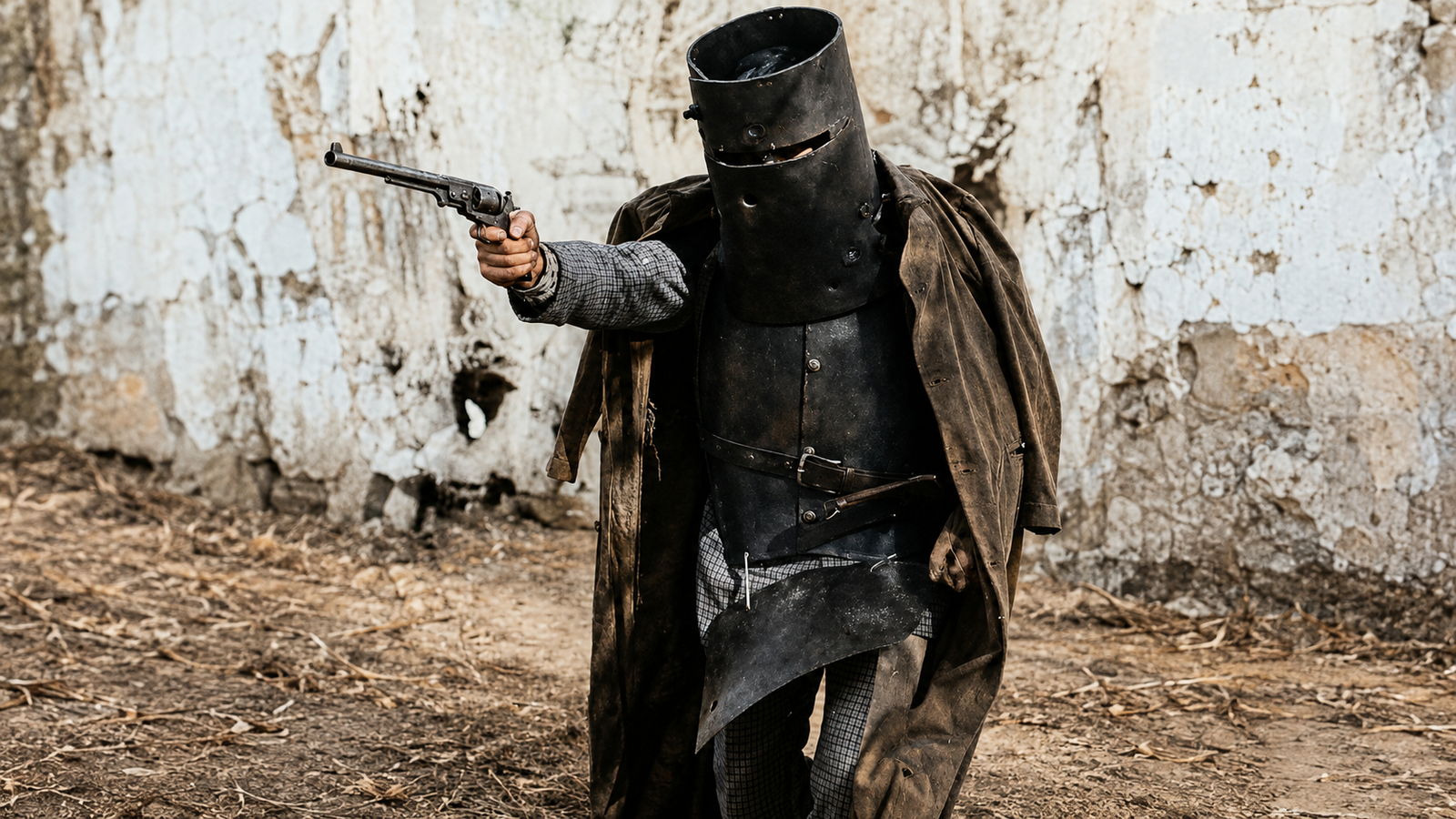
In June 1880, Australian outlaw Ned Kelly walked into one of the most famous final stands in criminal history wearing something almost unbelievable: a homemade suit of iron armor weighing roughly 44 kilograms.
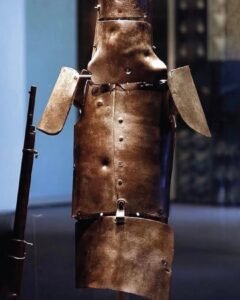
The crude metal suit, complete with its distinctive cylindrical helmet and narrow eye slit, was designed to protect Kelly from police gunfire. More than 140 years later, it remains one of the most recognizable objects associated with Australian history.
By 1880, Ned Kelly and his gang had been fugitives for almost two years.
The group consisted of Ned Kelly, his younger brother Dan Kelly, Joe Byrne and Steve Hart. They were wanted for robberies, violent confrontations and the deaths of police officers.
Knowing that another major confrontation with authorities was almost inevitable, the gang began preparing an extraordinary form of protection.
They constructed individual suits of heavy iron armor.
The idea was simple: if bullets could not penetrate the metal covering their heads and torsos, they might survive long enough to overpower police during a gunfight.
The armor was largely manufactured from thick pieces of agricultural iron, particularly mouldboards taken from ploughs.
These heavy pieces of metal were heated and hammered into shape before being assembled into protective sections.
Kelly’s armor included a cylindrical helmet, chest protection, a back plate and a metal apron covering part of his lower torso.
The helmet became the most famous part of the design. Its narrow horizontal opening allowed Kelly to see while keeping most of his head protected.
The finished suit weighed approximately 44 kilograms, or about 97 pounds.
Walking while carrying that much iron was exhausting, but during a gunfight the protection offered an obvious advantage.
Kelly’s armor became famous during the siege at Glenrowan, Victoria, in June 1880.
The Kelly gang occupied the Glenrowan Inn and held numerous people inside while preparing for a confrontation with police.
Part of their plan involved damaging railway tracks so that a train carrying police reinforcements would derail.
That plan failed.
A local schoolteacher, Thomas Curnow, managed to leave the hotel and warn the approaching train before it reached the damaged section of railway.
Police soon surrounded the inn.
A prolonged gun battle followed.
During the confrontation, Kelly emerged wearing his heavy iron armor.
Police fired repeatedly.
Bullets struck the metal protecting his head and torso, but many of the shots failed to stop him.
For officers watching through the darkness and smoke, the sight must have been extraordinary. Kelly appeared almost mechanical as bullets struck the armor while he continued moving.
The armor was doing exactly what it had been designed to do.
But it had one major weakness.
Kelly’s legs were almost completely exposed.
Once police realized that shooting his armored torso was ineffective, they began targeting his lower body.
Multiple shots struck Kelly’s unprotected legs.
Unable to continue fighting, he eventually collapsed and was captured.
Ned Kelly was the only member of the gang to survive the siege.
Joe Byrne was killed during the confrontation, while Dan Kelly and Steve Hart died inside the Glenrowan Inn.
After his capture, Ned Kelly was taken to Melbourne and eventually tried for murder.
He was convicted and sentenced to death.
On November 11, 1880, Ned Kelly was hanged at Melbourne Gaol.
He was only 25 years old.
Kelly’s legacy remains deeply controversial.
To many Australians, he was a violent criminal whose gang committed robberies and killed police officers.
To others, particularly generations influenced by stories about the treatment of poor Irish settlers in colonial Australia, Kelly became a symbol of rebellion against authority.
That debate has continued for more than a century.
But regardless of how Kelly himself is viewed, his homemade armor has become an unmistakable symbol of Australian history.
The surviving pieces of Ned Kelly’s armor are preserved by the State Library Victoria in Melbourne.
Researchers and conservators have spent years studying the armor and determining which surviving pieces originally belonged to each member of the Kelly gang.
The battered steel still carries evidence of the violent confrontation at Glenrowan.
Today, visitors can look at the same crude pieces of iron that Kelly trusted to protect him from police bullets more than 140 years ago.
The armor ultimately failed to save him.
But its strange appearance, enormous weight and surprising effectiveness turned Ned Kelly’s last stand into one of the most unforgettable episodes in Australian history