
Newsletter Subscribe
Enter your email address below and subscribe to our newsletter

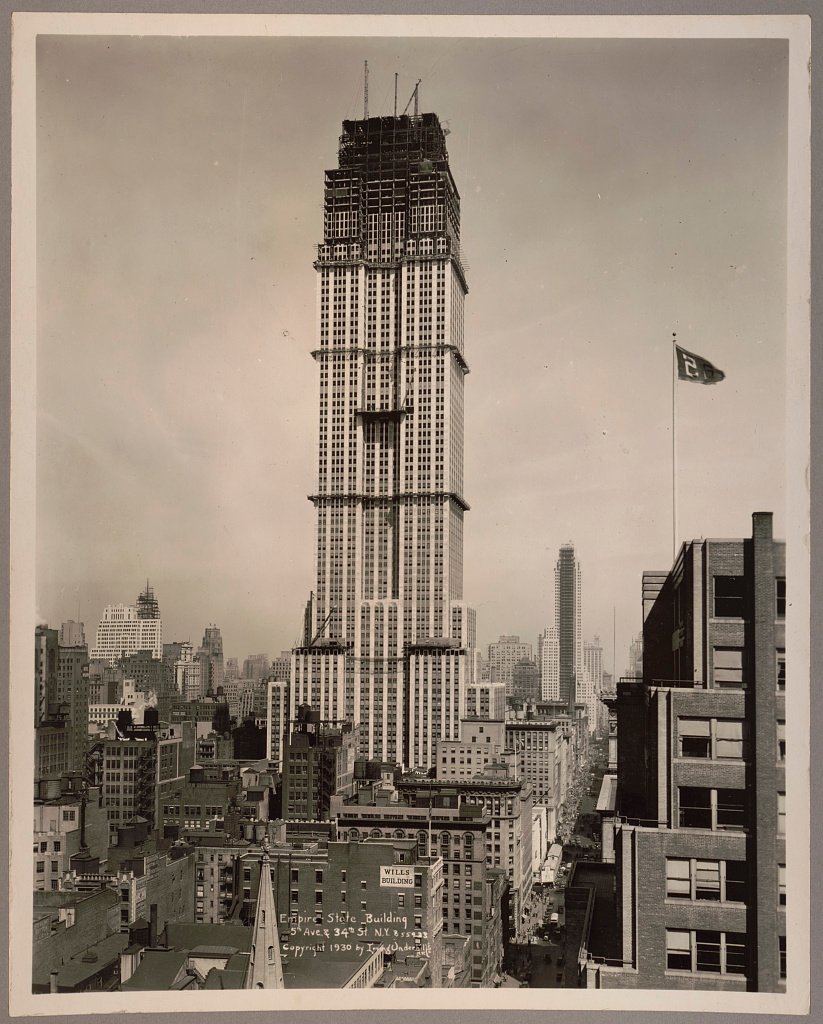
Built during the Great Depression, the Empire State Building rose above Manhattan at extraordinary speed. Here is how one of America’s most famous skyscrapers was completed in just 410 days.
The Empire State Building construction project remains one of the most remarkable achievements in American architectural history. Rising above Manhattan during the darkest years of the Great Depression, the skyscraper went from the beginning of construction to its official opening in only 410 days.
Today, the Empire State Building is one of the most recognizable landmarks in the world. But in 1930, it was an extraordinarily ambitious project involving thousands of workers, enormous quantities of steel, and a construction schedule that would still be impressive by modern standards.
New York City experienced an intense skyscraper boom during the late 1920s. Wealthy developers competed to create buildings that were larger, more impressive, and taller than anything previously constructed.
The Chrysler Building reached 1,046 feet and became the world’s tallest building in 1930. Its record would not last long.
Businessman John J. Raskob, previously an executive at General Motors, was one of the driving forces behind the Empire State Building project. Former New York governor Al Smith became president of the company responsible for constructing and operating the skyscraper.
The architectural firm Shreve, Lamb & Harmon designed the building in the Art Deco style that was becoming increasingly associated with modern New York.
The plan eventually called for a 102-story skyscraper rising 1,250 feet to its roof.
The goal was clear: New York would have a new tallest building.
Construction officially began on March 17, 1930.
The site at Fifth Avenue and 34th Street had previously been occupied by the original Waldorf-Astoria Hotel. After the old hotel was demolished and the site prepared, workers began constructing the enormous steel framework that would support the new skyscraper.
The project required extraordinary organization.
Thousands of pieces of structural steel had to be manufactured, transported to Manhattan, lifted hundreds of feet into the air, and installed in the correct sequence.
Instead of storing enormous quantities of material at the construction site, deliveries were carefully scheduled so materials could often be moved almost directly from trucks to the areas where they were needed.
This helped turn the construction site into something resembling a giant assembly line.
The speed of the Empire State Building construction became legendary.
At peak periods, the steel frame reportedly rose at a rate of approximately four and a half stories per week.
Steel columns arrived already manufactured to precise measurements. Derricks lifted them into position, where ironworkers connected them to the growing skeleton of the building.
Behind the steel crews came other workers installing floors, masonry, windows, plumbing, electrical systems, elevators, and interior finishes.
Thousands of workers were involved during construction.
Many were immigrants or the children of immigrants who had become part of New York’s enormous construction workforce. Skilled ironworkers worked at extreme heights with equipment and safety standards far different from those used today.
Mohawk ironworkers also became famous for their contribution to New York’s skyscraper-building era. Generations of Mohawk workers from communities including Kahnawà:ke developed reputations as highly skilled structural ironworkers and participated in numerous major New York construction projects.
The photographs of workers standing, sitting, and walking across narrow steel beams high above Manhattan became enduring symbols of the period.
Speed did not come simply from making workers move faster.
Organization was one of the project’s greatest strengths.
Architects, engineers, suppliers, contractors, and construction crews followed an extremely detailed schedule. Different parts of the building could be worked on simultaneously.
While steelworkers extended the structure upward, crews on lower floors could install exterior stone, windows, utilities, and interior components.
The building required enormous quantities of material, including structural steel, limestone, granite, brick, aluminum, and glass.
The exterior was designed with strong vertical lines that emphasized the building’s extraordinary height.
As the skyscraper rose, New Yorkers could watch its appearance change almost daily.
The most extraordinary number associated with the project is 410 days.
Construction began on March 17, 1930.
The Empire State Building officially opened on May 1, 1931.
Only about 13 and a half months separated those two dates.
On opening day, President Herbert Hoover participated symbolically from Washington, D.C., while ceremonies took place in New York.
At 1,250 feet, the Empire State Building became the tallest building in the world.
It would keep that title for roughly four decades.
Although the construction was an engineering triumph, the financial timing could hardly have been worse.
The Wall Street Crash had occurred in October 1929, only months before construction began. The United States was entering the Great Depression.
Businesses failed, unemployment soared, and demand for expensive Manhattan office space collapsed.
When the Empire State Building opened, significant portions of its office space remained empty.
New Yorkers reportedly began referring to it sarcastically as the “Empty State Building.”
Tourism became an important source of income. Visitors were fascinated by the opportunity to travel high above Manhattan and look across New York from the building’s observation areas.
Over time, occupancy improved and the building became financially successful.
The building’s extraordinary height was partly the result of the skyscraper competition taking place in New York.
But its distinctive upper section had another purpose.
The original design incorporated a mast that promoters hoped could serve as a docking station for passenger airships.
The idea was dramatic: passengers would supposedly arrive in New York by dirigible and disembark near the top of one of the world’s tallest buildings.
In reality, powerful winds and dangerous conditions at that height made regular airship docking impractical.
The mast never became the transportation hub its promoters imagined.
It nevertheless contributed to the unmistakable silhouette that made the Empire State Building famous.
For decades, the Empire State Building dominated the Manhattan skyline.
Its status as the world’s tallest building ended after the completion of the original World Trade Center towers in the early 1970s, but its cultural importance never disappeared.
The skyscraper appeared in films, photographs, advertisements, television programs, and countless images of New York.
One of its most famous appearances came in the 1933 film King Kong, only two years after the building opened.
The image of the skyscraper became inseparable from the image of New York itself.
Modern skyscrapers benefit from advanced computers, sophisticated cranes, improved safety equipment, and construction technologies that did not exist in 1930.
That makes the speed of the Empire State Building construction even more striking.
From the beginning of construction to opening day, workers completed one of the largest and tallest structures ever attempted in just 410 days.
The building emerged during an economic catastrophe, survived decades of changes to New York’s skyline, and remains one of America’s most recognizable architectural landmarks.
More than nine decades later, the Empire State Building is not simply a skyscraper.
It is a monument to an era when New York was racing upward.
Empire State Building — History
https://www.esbnyc.com/about/history
Library of Congress — Empire State Building Opens
https://www.loc.gov/item/today-in-history/may-01/
Library of Congress — Empire State Building Construction Photograph
https://www.loc.gov/resource/ppmsca.50131/